Is granola healthy? Granola is often hailed as a healthy snack or breakfast option. Its combination of oats, nuts, seeds, and almonds makes it an attractive choice for those seeking a quick, nutritious meal. However, it’s essential to carefully review the nutritional content of granola. While it can be a source of essential nutrients, some granola brands may contain added sugars and unhealthy fats and be high in calories. This article breaks down the nutritional profile of granola and highlights the pros and cons to determine whether it truly deserves its healthy label.
What’s Inside Granola: A Nutritional Overview
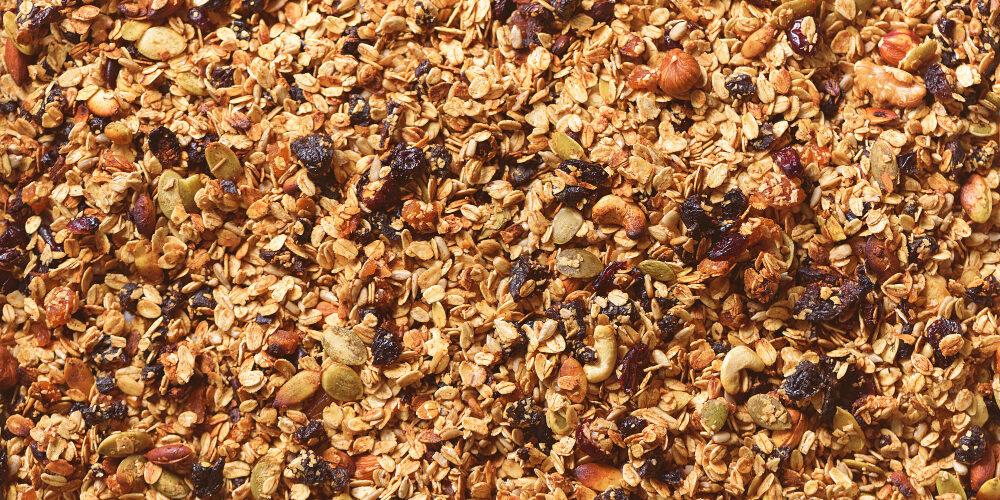
Granola typically contains oats, nuts, seeds, and toasted almonds. Oats are a good source of fibre, which aids digestion and helps control blood sugar levels. On the other hand, nuts like almonds and walnuts contribute healthy fats. However, the nutritional value of granola can vary significantly depending on the brand and its ingredients. Some store-bought granola options are loaded with added sugars, preservatives, and unhealthy oils, which can negate their health benefits.
Understanding Granola’s Calories and Serving Size
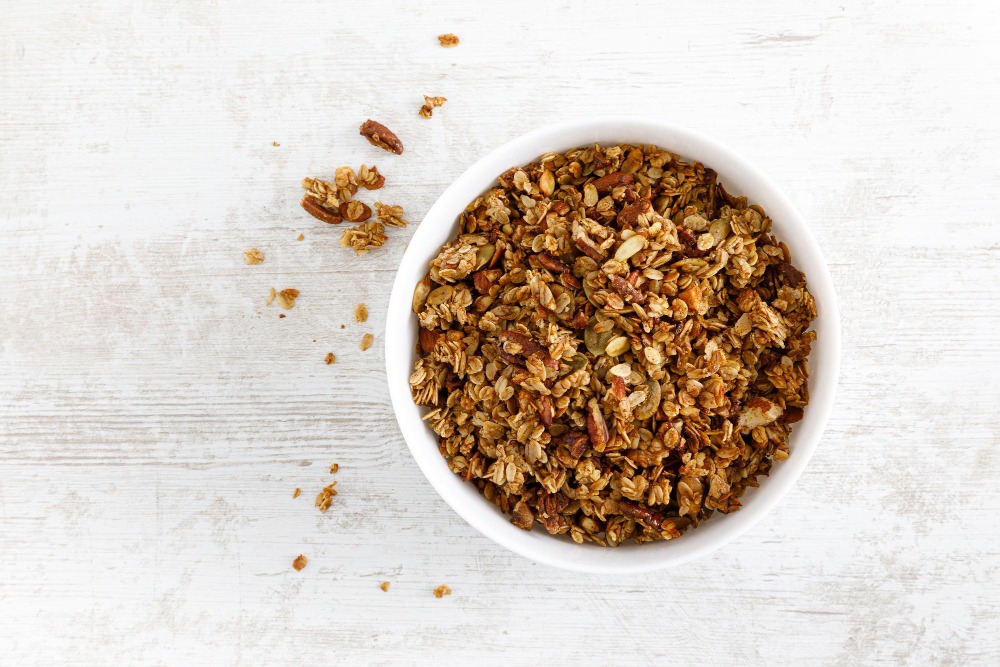
Granola is high in calories, primarily due to the nuts, seeds, and sweeteners used in its preparation. A typical serving of granola is about ¼ cup (30 grams) and provides 120-150 calories. While granola can be a great energy source, portion control is key to avoiding overconsumption, especially when combined with other calorie-dense foods like yogurt.
Health Benefits of Granola
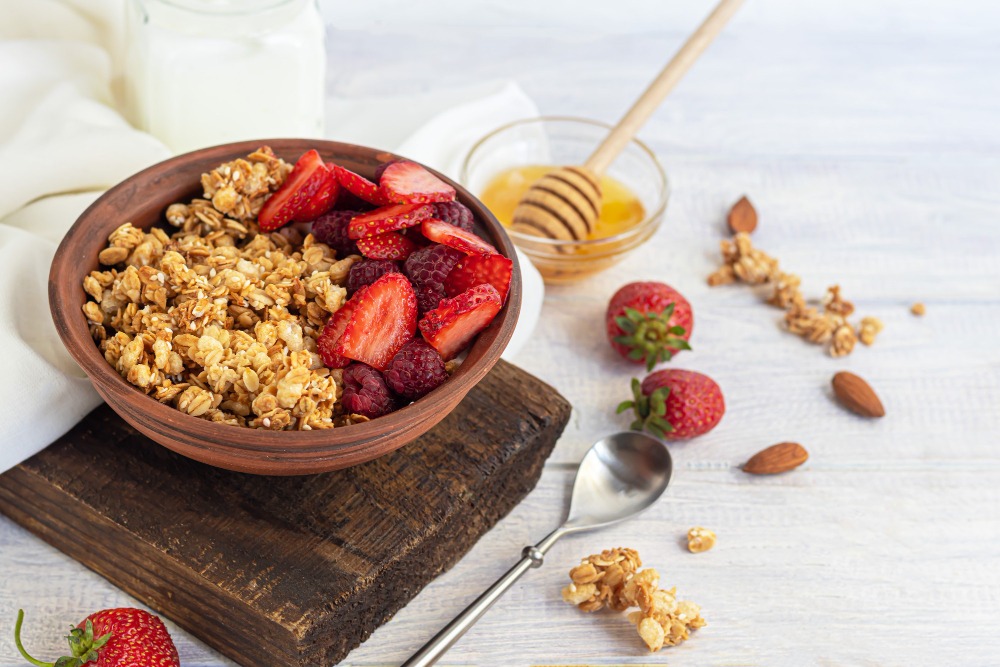
So, is granola healthy? When consumed in moderation, granola can provide several health benefits. Here are some important health benefits of granola that make it suitable for a healthier lifestyle.
Good Source of Fibre
Granola is rich in fibre, especially when it’s made with whole oats and seeds. Fibre plays a crucial role in digestive health by promoting regular bowel movements and preventing constipation. It also helps control blood sugar levels and supports heart health by lowering cholesterol.
Protein-Rich (with Additions)
Granola can be an excellent source of plant-based protein, mainly when it includes nuts and seeds such as almonds, sunflower seeds, and flaxseeds. Protein is vital for muscle repair and growth, and it can help keep you feeling full longer, making granola a good option for a satisfying breakfast or snack. Therefore, many people use granola before or after workouts to meet their daily protein needs.
Antioxidants from Seeds and Nuts
Seeds and nuts in granola provide antioxidants that help combat oxidative stress and reduce inflammation. Antioxidants from ingredients like hemp seeds, Pumpkin seeds, sesame seeds and almonds support immune function and skin health and may even reduce the risk of chronic diseases such as heart disease and cancer.
The Downsides of Granola
Despite its benefits, granola has downsides, particularly when consumed in large portions or made with excessive sugar and unhealthy fats. Let’s dive into these potential drawbacks.
High in Sugar
Many commercial granola brands contain significant amounts of added sugar, often in the form of honey, syrup, or refined sugars. Excess sugar intake can contribute to weight gain, increase the risk of type 2 diabetes, and negatively impact heart health. It’s essential to choose granola with minimal added sugars or make your own at home using natural sweeteners.
High Calorie Content
Granola can be calorie-dense, with some store-bought varieties packing up to 300 calories per serving. The combination of nuts, seeds, and sweeteners can quickly add up. While it provides healthy fats and protein, portion control is essential to avoid excessive calorie intake, especially for those watching their weight.
Potentially High in Unhealthy Fats
Some commercially prepared granolas may contain unhealthy trans fats or excessive amounts of saturated fats from processed oils. These fats can increase your risk of heart disease and inflammation. Choosing granola made with healthier oils, such as coconut oil or olive oil, can mitigate this issue.
So, is granola healthy or unhealthy?
Granola can be healthy, but it depends mainly on its ingredients and portion size. When made with wholesome ingredients like oats, nuts, seeds, and almonds, granola can be a nutritious, fibre-packed, and protein-rich breakfast or snack. However, many commercial granolas contain high amounts of added sugars, unhealthy fats, and empty calories. To ensure granola remains a healthy choice, opt for varieties with minimal added sugars or prepare your own at home.
How to Make Granola Healthier
Making granola healthier involves selecting wholesome ingredients and being mindful of the sweeteners and oils you use.
Choose Granola with Minimal Added Sugar
Look for granola that is low in added sugars. Many granolas use natural sweeteners like honey or maple syrup, but it’s important to use them sparingly. You can also make your own granola at home, adjusting the sweetness to your preference. Customising your granola to be healthier makes it safe to eat every day.
Use Healthy Fats
Opt for granola made with healthy fats, such as those from nuts, seeds, or coconut oil. These fats provide essential fatty acids that support heart health and brain function. Avoid granolas with hydrogenated oils or excessive amounts of butter. Try to choose products that claim to use clean, plant-based ingredients, so the granola you consume contains healthy fats.
Add Protein and Fibre Boosters
Boost the protein and fibre content of your granola by adding seeds such as chia or flax, or by including nuts such as almonds or pistachios. These additions will not only increase the nutritional value but also make the granola more filling and satisfying. You can also consume granola in various ways, such as combining it with overnight oats, which are very high in protein and fibre.
Enjoy the Clean Crunch of Oats My Goodness Gluten-Free Granola
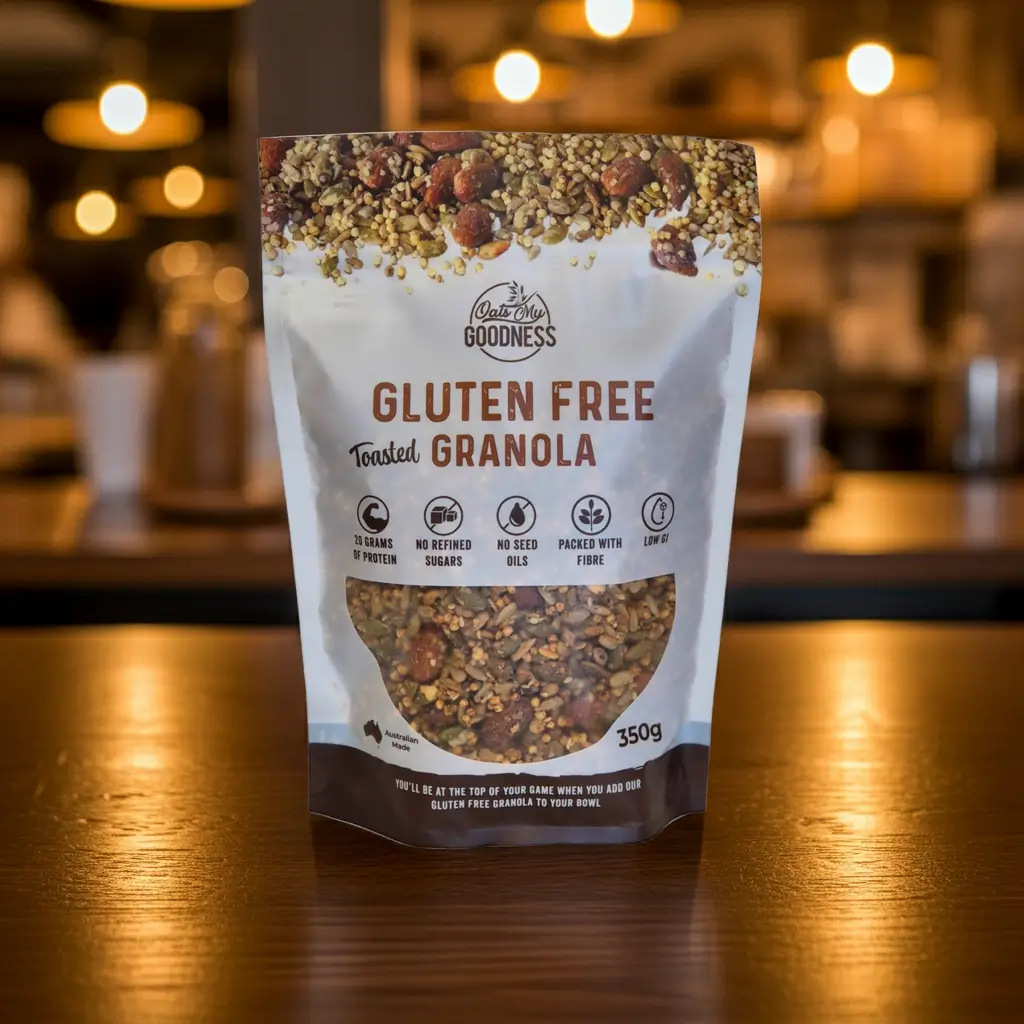
Oats My Goodness gluten-free granola is a delicious and nutritious option for those seeking a healthier breakfast or snack. Made with the finest natural ingredients, it offers a balanced mix of protein, fibre, and healthy fats while remaining free of added sugars and unhealthy fats. Whether enjoyed on its own, as a topping of overnight oats, with fresh fruit, or paired with yogurt, it provides the perfect start to your day. Experience the clean crunch of Oats My Goodness, and make your mornings both tasty and nutritious!
Frequently Asked Questions
Is it healthy to eat granola daily?
Eating granola daily can be healthy, but moderation is key. Opt for granola with minimal added sugars and high-quality ingredients, such as whole oats, nuts, and seeds. Make sure to control your portion size to avoid excessive calorie intake.
How healthy is granola cereal?
Granola cereal can be healthy if it’s made with wholesome ingredients like oats, nuts, seeds, and almonds. However, many store-bought options are high in sugar and unhealthy fats, so choosing a clean, low-sugar variety is essential to maintain health benefits.
Is granola healthy for breakfast?
Granola can be a healthy breakfast option if made with nutritious ingredients. Pair it with Greek yogurt or fresh fruits for added protein and vitamins. However, be cautious of granola with excessive added sugars or unhealthy fats.
Conclusion
Granola can be a healthy and nutritious choice when made with the right ingredients. Its high fibre and protein content, along with its antioxidants, make it an excellent addition to any diet. However, it’s crucial to choose low-sugar varieties and watch portion sizes to prevent excessive calorie intake.
For a truly wholesome granola experience, try Oats My Goodness gluten-free granola. Packed with clean ingredients, it offers a nutritious and delicious start to your day. Make the switch today and enjoy granola as part of your healthy lifestyle!